
Home Vacations France, England, Scotland Previous Page Next Page
Sunday. July 23, 2006
Clock Tower in the Palace of Westminster
House of Parliament

St Paul's
Cathedral is a cathedral on Ludgate Hill, in the City of London, and the
seat of the Bishop of London. The present building dates from the 17th century,
and is generally reckoned to be London's fourth St Paul's Cathedral, although
the number is higher if every major medieval reconstruction is counted as a new
cathedral.
St Paul's Cathedral

The Monument to the Great Fire of London, more
commonly known as The Monument is a 61-metre (202-foot) tall stone Roman doric
column in the City of London, near to the northern end of London Bridge. It is
located at the junction of Monument Street and Fish Street Hill, 61 metres from
where the Great Fire of London started in 1666.
The Great Fire of London was a major fire that swept through the City of London
from 2-5 September 1666, and resulted more or less in the destruction of the
city. Before this fire, two early fires of London, in 1133/1135 and 1212, both
of which destroyed a large part of the city, were known by the same name. Later,
the Luftwaffe's fire-raid on the City on 29th December 1940 became known as The
Second Great Fire of London.
The Monument to the Great Fire of London

Though we did not climb the monument, it is
possible to reach the top of the monument by climbing up the narrow winding
staircase of 311 steps. A cage was added in the mid-19th century at the top of
the Monument to prevent people jumping off, after six people had committed
suicide between 1788 and 1842.

Spike by London Bridge

The
London Dungeon is a tourist attraction based in Tooley Street, London, near
London Bridge rail station. It recreates various gory historical events in a
style which attempts to make them appealing to the younger generation. Some of
the more than 40 exhibits include 'The Great Fire of London', 'Jack the Ripper',
'Judgment Day', 'The Torture Chamber', 'Henry VIII', 'The Tower of London' and
'The French Revolution'. In 2003 a special exhibition opened on the Great Plague
of 1665.

While ReJeana enjoyed this I thought it was rather lame.

Tower Bridge

Tower of London

Tower of London
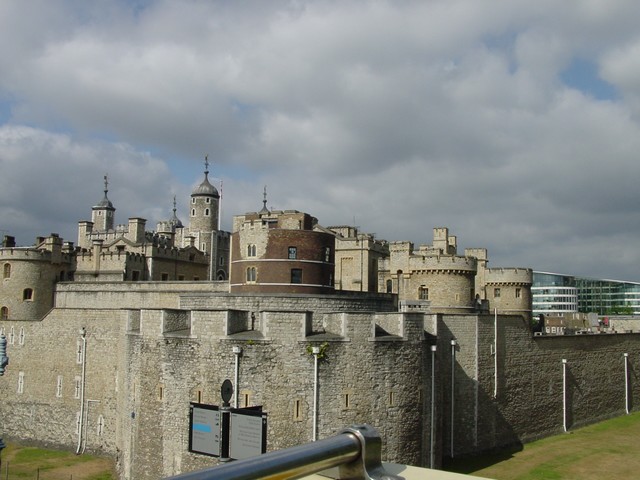
Tower of London

Tower Bridge with H.M.S. Belfast on the right

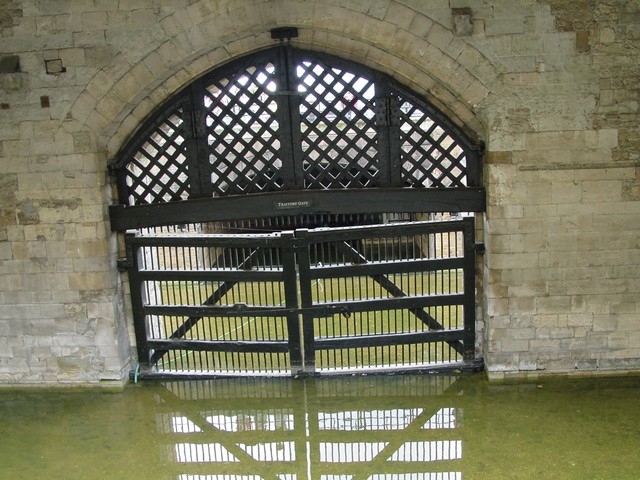
Tower of London's Traitor's Gate

Jeana and a British mail box

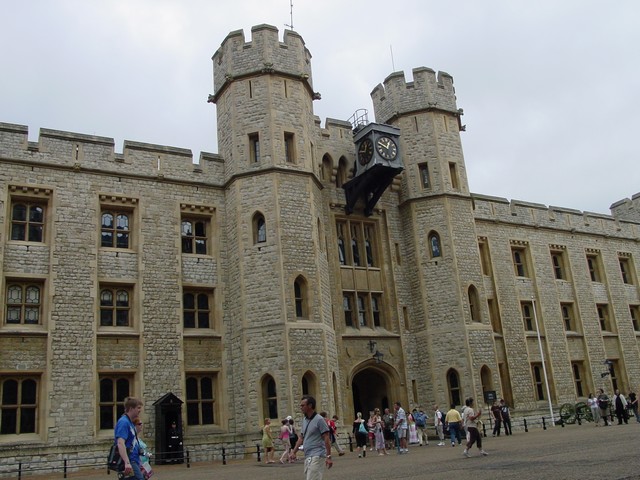
Entry to the Tower of London

The Tower of London is a landmark in central
London—in the London Borough of Tower Hamlets—just outside the City of London.
The White Tower, the square building with turrets on each corner that gave it
its name, is actually in the middle of a complex of several buildings along the
River Thames in London, which have served as fortresses, armories, treasuries,
zoos/menageries, mints, palaces, places of execution, public records offices,
observatories, shelters, and prisons (particularly for upper class prisoners).
This last use has led to the phrase "sent to the Tower" meaning "imprisoned".
One widely known example was that Elizabeth I was imprisoned for a time in the
Tower during her sister Mary's reign.


The White Tower

The Jewel House
Traitors Gate was originally known as Water Gate, but was later changed when it was used as the landing for the Crown's enemies. All important prisoners entered the Tower through this gate. According to legend when Princess Elizabeth arrived on Palm Sunday 1554 she refused at first to land at the gate, angrily proclaiming that she was no traitor. A sharp shower of rain however, caused her to change her mind. Later when as Queen she visited the Tower she insisted on passing through Traitors Gate. "What was good enough for Elizabeth the Princess is good enough for Elizabeth the Queen", she is supposed to have told the Constable.
Traitor's Gate
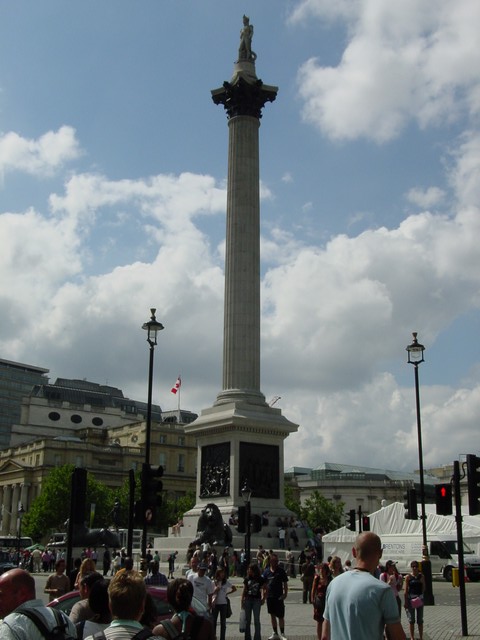
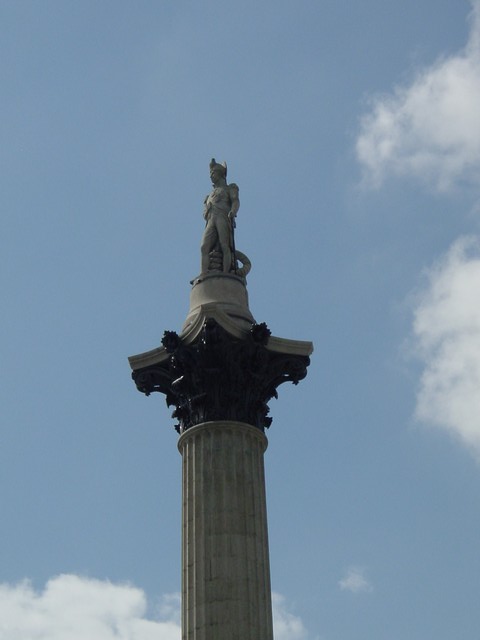
Nelson's Column is a monument in Trafalgar
Square, London, England.
The column was built between 1840 and 1843 to commemorate Admiral Horatio
Nelson's death at the Battle of Trafalgar in 1805. The 5.5m (18ft) statue of
Nelson stands on top of a 46 m (151 ft) granite column. The statue faces south,
towards the Palace of Westminster and along Pall Mall, where his ships are
represented on the top of each flagpole. The top of the Corinthian column (based
on one from the Temple of Mars Ultor in Rome) is decorated with bronze acanthus
leaves cast from British cannons. The square pedestal is decorated with four
bronze panels, cast from captured French guns, depicting Nelson's four great
victories.
The monument was designed by architect William Railton in 1838, and built by the
firm Peto & Grissell. Railton's original 1:22-scale stone model is exhibited at
the National Maritime Museum in Greenwich, London. The sandstone statue at the
top was sculpted by E.H. Baily of the Royal Academy; a small bronze plaque
crediting him is at the base of the statue. The entire monument was built at a
cost of 47,500 pounds, or 3.5 million pounds in 2004 terms.
Nelson's Column
Admiral Horatio Nelson
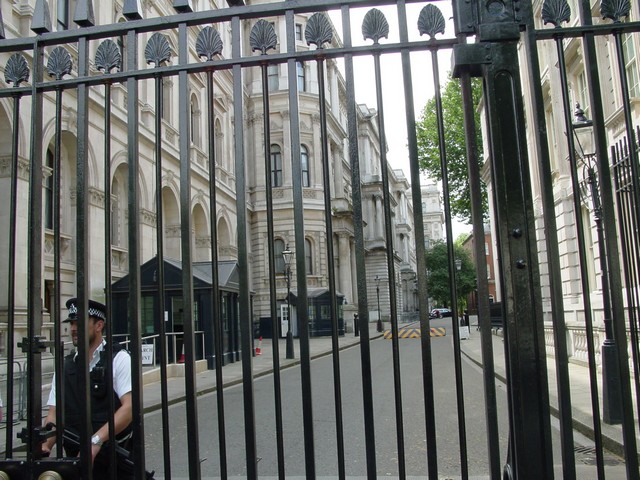
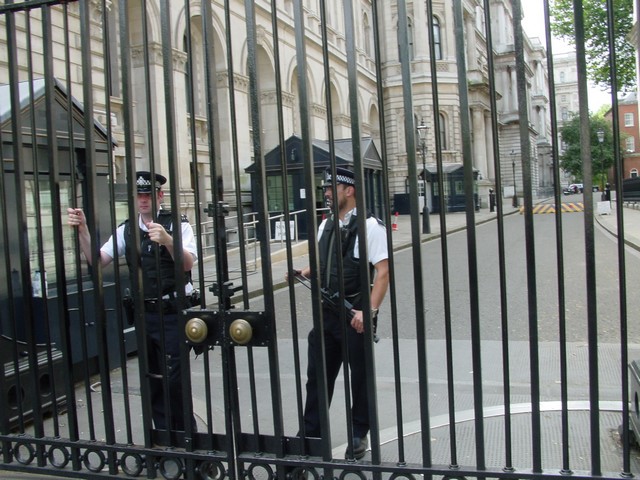
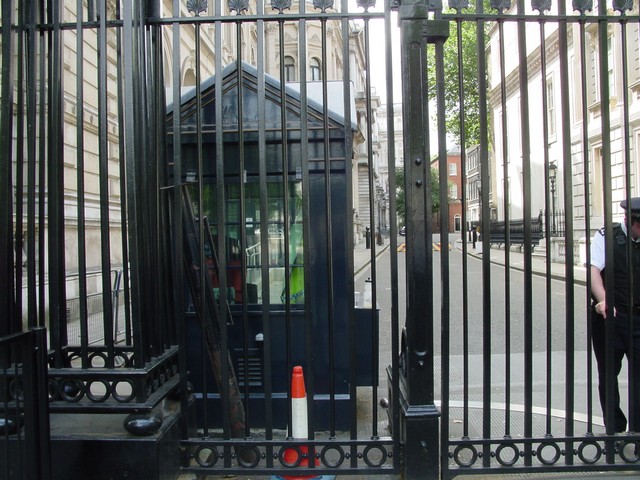
10 Downing Street is
commonly known as the residence of the Prime Minister of the United Kingdom of
Great Britain and Northern Ireland, situated on Downing Street in the City of
Westminster, central London. It is actually the official residence of the First
Lord of the Treasury, but in modern times this post has always been held
simultaneously with the office of Prime Minister
Gate to Downing Street

London Calling.....

ReJeana and the Clock Tower

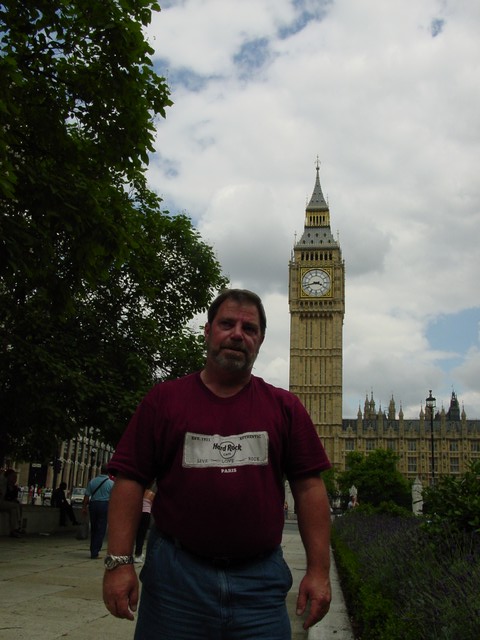
Jim and the Clock Tower
Our hotel Crowne Plaza Hotel LONDON-ST. JAMES

ReJeana next to something smaller than her, a Smart Car

Home Vacations France, England, Scotland Previous Page Next Page